Anna Tardella, Former Academic Coordinator, K-12 Literacy
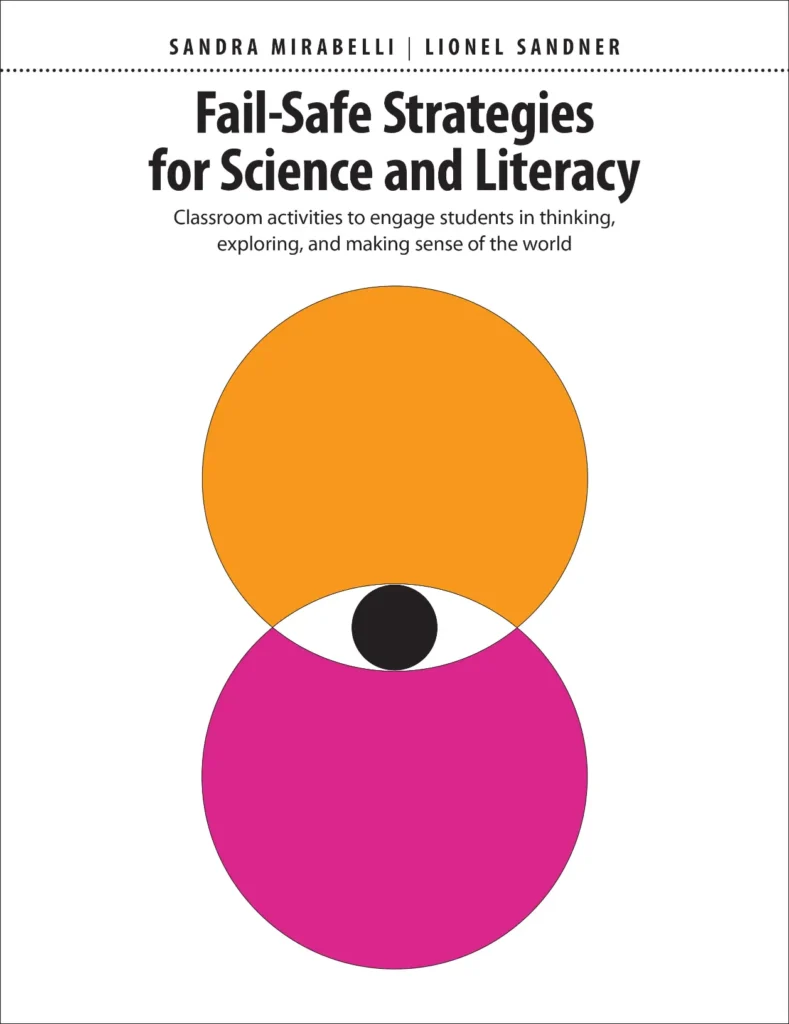
 Fail-Safe Strategies for Science and Literacy
Sandra and Lionel have created an invaluable resource for educators that is both practical for classroom teachers and learning coaches and hands-on for students of all ages and abilities. Fail-Safe Strategies for Science and Literacy focuses on supporting students in effectively using literacy strategies to learn key science concepts.
What makes the book practical for classroom teachers? It’s a collection of 25 engaging, ready-to-use science and literacy lessons complete with a variety of student-friendly tools designed to enhance student learning. More importantly for classroom teachers, learning coaches, department heads and administrators, the fail-safe strategies presented in this book can be seamlessly integrated across curriculum areas, grade levels and with students at different points in their learning journey. The integration not only saves teachers time in both planning and assessment of student learning but also allows them to assess their students through multiple lenses all at the same time.
How does the hands-on approach in this book engage students and enhance their learning experience? The 25 tried and true hands-on activities and accompanying lessons invite students to think about and explore the world around them. As students investigate science concepts with potatoes, raisins or soda pop - what student wouldn’t enjoy that? - they will be observing, wondering and making predictions. These Thinking Routines along with Failsafe Strategies like questioning and vocabulary building help students learn key concepts in science while being immersed in a literacy-rich environment. Students of all ages and abilities will feel supported and enjoy their learning, all at the same time.
Bottom-line, FailSafe Strategies for Science and Literacy is a win for teachers and a win for students. Teachers gain an invaluable resource that streamlines planning and supports instruction while students will find themselves engaged and supported in authentic, dynamic and meaningful learning. Explore the benefits of this book by following this link: https://buff.ly/3F3gQYO
Lynnette Werner, Former Literacy Consultant and Elementary Teacher
"Failsafe Strategies for Science and Literacy" is a game-changing resource for J/I educators looking to seamlessly integrate literacy and the science curriculum. Juggling a number of subject areas, addressing numerous expectations and facing rigid time constraints are onerous challenges that J/I teachers face. In addition, not all educators come to the classroom with an expertise in teaching science or literacy. This book will help you meet these challenges with 25 easy-to-implement science activities that develop scientific content knowledge and thinking skills while integrating literacy through authentic connections to language arts. The authors clearly explain the scientific concepts involved in each activity. In addition, the anchor charts and graphic organizers support both teaching and learning.
Included are inquiry-based lessons that develop thinking skills through 5 “Thinking Routines” (observe & wonder, predict & infer, sort & categorize, interpret & analyze, conclude & apply). Each lesson offers connections that may involve reading/viewing, writing, listening and speaking. Vocabulary development and reading strategy use are also addressed. These lessons and thinking routines can be connected across grades to multiple science and language strands.
The first section, "Thinking Routines Linking Science and Literacy," provides the research base for these thinking skills. It delves into the cognitive science behind learning, offering a comprehensive understanding of how the brain processes information. Introductory activities to the “Thinking Routines,” like "The Missing Potato Report" and "Making Tree-mendous Inferences," are sure to engage students in critical thinking and sense making in our classrooms.
The second section provides practical examples of how to integrate literacy strategies into the 25 science activities. What stands out is how practical the book is; while based on theoretical concepts, it’s also a treasure trove of science activities and literacy strategies. Specific activities like "See, Think, Wonder" coupled with the “Drops of Water on a Coin," exemplify how scientific inquiry can be enhanced when applying an intentional literacy approach. Strategy use and student-friendly organizers support students’ working memory while ensuring a “failsafe” learning experience.
What truly resonates is the authors' recognition that literacy is a foundational tool not only for scientific exploration but for all areas of learning! By intertwining these disciplines, the book doesn't just support improved academic performance but it also nurtures critical thinking and communication skills that are essential for student engagement and future success.
L. Van Horne on amazon.ca
“ As a new teacher, I find this book a great resource when thinking of fun and creative ways to teach science and literacy. The activities are explained well, are easy to understand, and are adaptable to your classroom. I used the Inference Cube activity with two grade 7 classes and the students loved it and were very engaged in the lesson/activity. I will be using the other activities in the book in my future classrooms.” (L. Van Horne on amazon.ca)
B. Caverhill on amazon.ca
“Classroom teachers know time is in short supply. The activities in this book are explained quickly and easily. Students enjoy the assignments and they are informative and fun! Lots to learn from this great book about blending science & literacy.” (B. Caverhill on amazon.ca)
R. Alexander, elementary teacher on amazon.ca
“This is an incredible resource which I would highly recommend for student engagement. By utilizing the strategies, students were continually revisiting their thoughts, perspectives and wonderings.” (R. Alexander, elementary teacher on amazon.ca)
Lorraine Giroux on amazon.ca
“I've always been enthusiastic about incorporating thinking routines—prompts designed to guide and scaffold students' critical thinking processes—into literacy and math. Recently, I read an insightful book that expanded my understanding by applying these routines to teach science concepts. In Fail-Safe Strategies for Science and Literacy, Sandra Mirabelli and Lionel Sandner focus on cognitive skills and building automaticity. The initial chapters provide essential background information and introduce an approach that deepens student thinking by pairing literacy thinking routines with hands-on science activities. I'm particularly excited to try the Observe and Wonder routine with the 'Wait...What?' strategy, using dancing raisins. It sounds like such a fun and engaging way to spark curiosity and critical thinking!” (Lorraine Giroux on amazon.ca)
Alexis G - Excellent source of practical, accessible, research-based strategies!
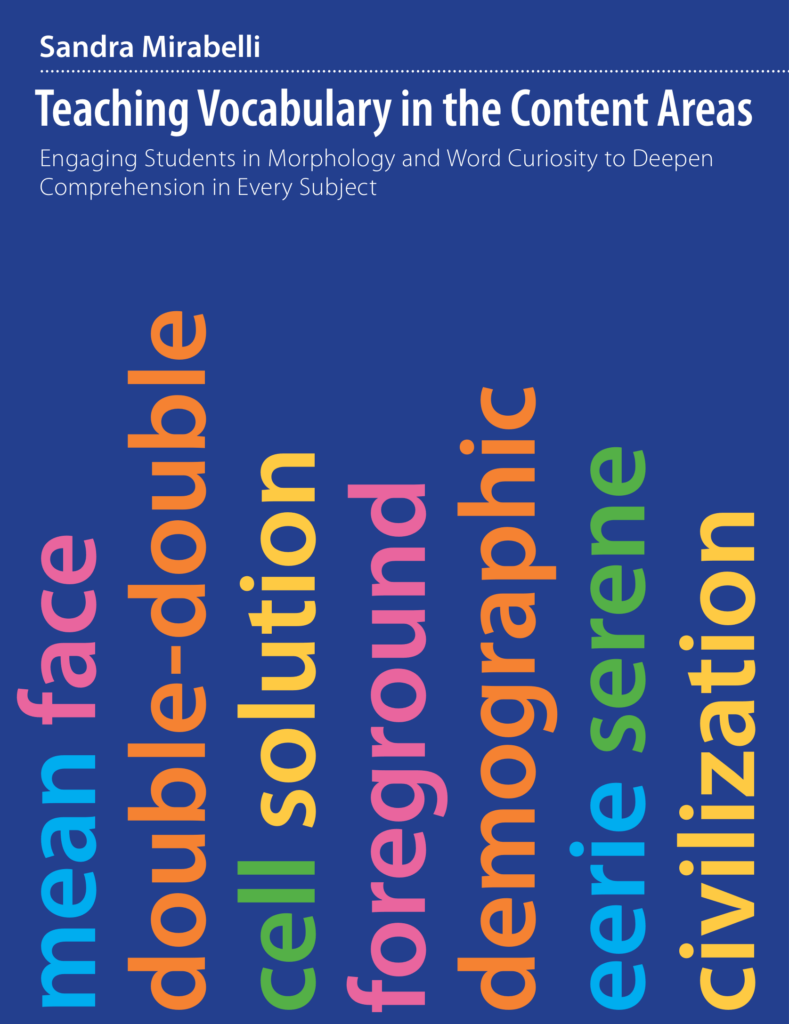
As a mathematics educator working with youth and adults, I continually seek ways to connect literacy and numeracy more intentionally. Teaching Vocabulary in the Content Areas by Sandra Mirabelli offers a solid and practical contribution to that work, reflecting the depth of experience and insight of its author.
One of the book's key strengths is how it situates classroom practice within broader conversations in literacy research, while also making explicit connections to mathematical vocabulary development. The emphasis on students not only hearing and seeing vocabulary, but also actively speaking it, is particularly impactful—an often-overlooked practice that has clear implications for strengthening mathematical understanding and discourse.
The inclusion of tools such as Explicit Teaching Planners, learner self-assessments, and "Thinking it Through" prompts provide accessible entry points for making student thinking visible. The author's guidance on using AI ethically to support instructional planning is also timely and thoughtfully presented, offering practical strategies that respect both teacher professionalism and student learning.
Connections to Sandra's earlier work, Fail Safe Strategies for Science and Literacy (2023), further enhance the text's utility, allowing educators to draw on both resources in complementary ways. For those with an interest in discourse, Chapter 8 offers particularly valuable insights for supporting and assessing mathematical talk.
Overall, this book is rich in both practical applications and theoretical grounding. It will be of significant value to classroom teachers, teacher educators, and researchers interested in literacy, numeracy, and the intersections between them.
Julie - Actual useful teaching resource!
I am an ESL/English/science/math teacher who has taught for 15 years. I have attended multiple PD sessions, and I can say that this is one of the ONLY resources I've actually wanted to use in my daily teaching. I was fortunate enough to attend the PD associated with this book, led by Sandra Mirabelli herself. She's fantastic, and deeply invested in making her resources user-friendly and practical.
A. Van Horne - Practical teaching resource
As a teacher, I love how simple and clear the activities are! It's perfect for building skills without overwhelming your students. Easy to use for independent work or small groups, and a fun way to practice the basics. Definitely a helpful resource to have!